

-
Canada

Living in Canada
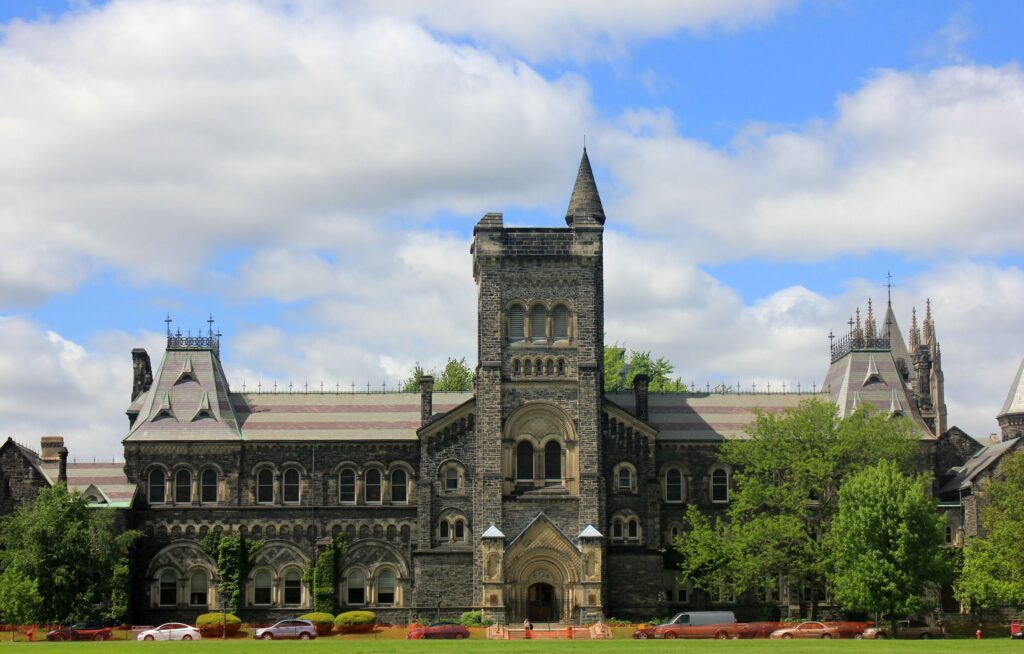
There are also a number of things you need to know as a student in Canada. We have summarised the most important information for you to make your start into student life in Canada easier.
Higher Education System and Languages
Unlike in many European countries, the education system in Canada is not regulated at national level, but by the provinces. This means that each university has its own conditions and procedures, and that there is no single uniform process. It is therefore important to inform yourself early and in detail about the university where you would like to study.
There are two main types of institutions:
- Universities, which are more theoretically and academically oriented;
- Colleges, which offer more practical and career-oriented programmes.
In most regions, you can study in English, while in Québec many programmes are also offered in French or bilingually. This makes Québec particularly attractive for Luxembourgish students.
Study Programmes and Degrees
Studies in Canada are structured in a relatively classic way. A Bachelor’s degree usually takes 3 to 4 years, after which you can do a Master’s degree (1 to 3 years), and then maybe a doctorate (3 years or more). In addition to traditional university programmes, there are also college diplomas, which are shorter (1–3 years) and more practically oriented.
It is important to know that not all degrees are eligible for AideFi. For example, the “Diplôme d’études collégiales” (DEC) in Québec is not considered a higher education degree and is therefore not supported.
Application and Admission
Applications are usually submitted online via the website of the respective university, except in Alberta, British Columbia and Ontario, where applications are processed centrally. Selection is usually based on school results, and in some cases, a specific final grade or mention is required. It is recommended to apply to several universities at the same time in order to increase your chances of being accepted.
The application deadline is often between January and March, but it can vary significantly depending on the university and programme. It is therefore recommended to start gathering information as early as October of your final year of secondary school and to prepare your application early.
You can find further information on registration here:
Once you have been accepted, you will receive a “Lettre d’acceptation”, which is required for the administrative steps. To study in Canada, you must first apply for a “lettre d’attestation provinciale” (LAP) in order to obtain a “permis d’études”, which is mandatory. You must prove that you have sufficient financial resources, around 20,000 Canadian dollars per year.
For Québec, there is an additional procedure: you must first apply for a “Certificat d’acceptation du Québec” (CAQ) before you can obtain the study permit.
If you want to study in English, you will in most cases also have to take a language test such as TOEFL or IELTS.
Costs and Financial Support
Compared to Europe, studying in Canada is relatively expensive. Tuition fees usually range between €8,000 and €23,000 per year, depending on the university and programme.
For Luxembourgish students, however, Québec is an interesting option because there is a special cooperation agreement with the Luxembourgish state. Within this framework, a limited number of scholarships are available, allowing students to pay the same tuition fees as local students rather than the higher fees charged to international students. These scholarships are awarded on the basis of social and academic criteria and are limited, so it is important to inform yourself early. The deadlines for applications are 30 September for the winter semester and 30 April for the autumn semester.
You can find further information here:
In addition, you can also apply for the AideFi from the Luxembourgish state, provided that the programme is offered by a recognised university and leads to a valid degree.
To find out whether your programme is eligible for AideFi, you can consult this website:
Practical Tips for Getting Started
If you want to study in Canada, good preparation is essential. It is important to look for accommodation early, especially in large cities such as Montréal or Toronto, where demand is high. Living costs can also be high, so you should plan your budget carefully.
Canada is a very international country and offers many opportunities to meet people from all over the world and build a strong network. At the same time, you should not underestimate the climate, especially the cold winters.
Overall, Canada offers high-quality education and a very rich student experience, but it also requires more organisation and solid financial preparation than many European countries.