

-
United Kingdom

Living in the United Kingdom
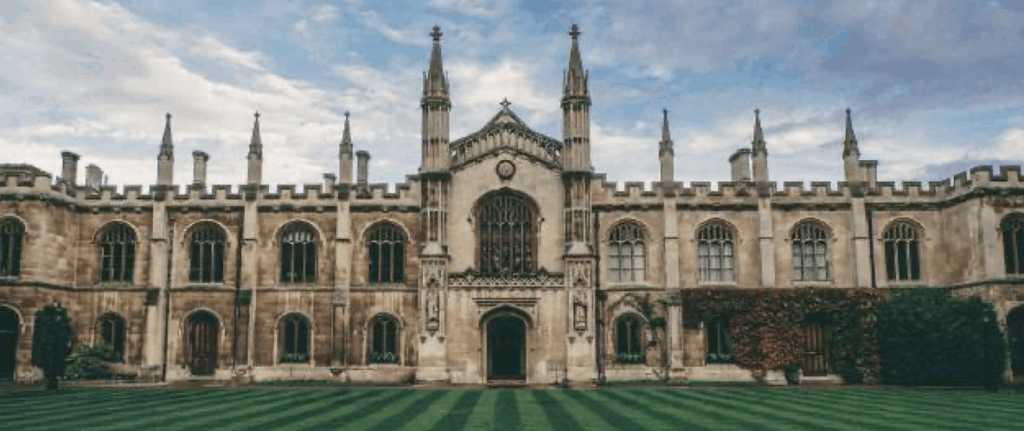
Are you studying a little farther from home and still have a few questions about life in the UK? Here you will find useful information about student life in Great Britain. Be sure to read the information on post-Brexit regulations, halls of residence, and the Master of Arts degree.
Student Visa
If you are starting your studies in England, Scotland, Wales, or Northern Ireland in September, you will need a visa to enter Great Britain. You will therefore also need a passport. The current cost of a student visa is £524, and its validity depends on your course and the duration of your studies.
You can apply for your visa at the earliest 6 months before your course starts. It usually takes around 3 weeks to receive a decision.
As part of your visa application, you must also pay the Immigration Health Surcharge (healthcare surcharge). The current cost for students is £776 per year.
To apply for a visa, you will need the following documents:
• a valid passport
• a Confirmation of Acceptance for Studies (CAS) from your university
If you encounter any difficulties during your stay in Great Britain, you can contact the Luxembourg Embassy in London:
27 Wilton Crescent
LONDON SW1X 8SD
Tel.: (+44-20) 7235 6963
londres.amb@mae.etat.lu
Further information is available here:
Brexit and Scotland
Unfortunately, following Brexit, the Students Awards Agency Scotland (SAAS) no longer covers tuition fees for Luxembourg students studying at Scottish universities.
Travel
The easiest and fastest way to travel to England or Scotland is by plane. There are direct flights to both destinations.
Luxair operates direct flights from Luxembourg Airport (Findel) to London, Manchester, and Edinburgh.
It is also possible to travel to Scotland by train.
Hall of Residence
In Great Britain, most universities have their own student accommodation. These are usually furnished residences with a shared kitchen, toilet, bathroom, and sometimes a common room. This type of accommodation is known as a Hall of Residence.
Depending on the residence, accommodation may include full board, half board, or self-catering. Some residences also offer a combination of these options. Open days are often organised so that prospective students can visit and get an impression of the accommodation.
In most halls of residence, students are required to move into different accommodation after their first year at university. In some cases, however, it is possible to stay for more than one year if there are enough places available. Rooms in halls of residence are generally available during the academic year (teaching period), although in some cases they can be rented for the entire calendar year.
Students are often required to pay a security deposit before moving into a hall of residence. Sometimes an administration fee is also charged to cover the cost of booking the room. This fee is non-refundable. Heating, electricity, and water are usually included in the rent. Students do not have to pay Council Tax, whether they live in university accommodation or rent privately. In many student residences, students also have to pay for each use of the laundry facilities (washing machine and dryer), usually around £3 per load.
Student residences are generally located close to campus, meaning that transport costs to the university are usually low. Another advantage of university-managed accommodation is that almost everything can be managed online. With private accommodation, however, it is often (though not always) necessary to be present in person to complete the rental arrangements. In addition, private landlords usually require a guarantor—someone living in the UK who guarantees that the rent will be paid. If you do not know anyone who can act as a guarantor, you will usually be required to pay several months’ rent in advance.
More information can be found at the following websites:
Master of Arts
In Scotland, students who complete a four-year university programme and obtain what is known as an Undergraduate Master should be aware that this qualification is not recognised as a master’s degree in Luxembourg and is not equivalent to a traditional master’s programme. During those four years, students usually study a broader range of subjects for the first one or two years before specialising later in the programme.
The title Master of Arts is a misleading designation for an undergraduate degree in Scotland. In practical terms, this means that the Scottish Undergraduate Master is recognised in Luxembourg only as a bachelor’s degree, even though it lasts four years (eight semesters) and is worth the equivalent of 240 ECTS credits. Students who wish to obtain a recognised master’s degree can then complete a Postgraduate Master, which usually takes one calendar year consisting of three semesters.
It is also important to know that a bachelor’s degree is not measured by the number of years spent at university or college, but by the number of ECTS credits earned during the programme. At many universities in England and Scotland, the ECTS system is not used. Instead, universities use their own credit system, with a fixed number of credits awarded each year. As a general rule, 2 UK credits are equivalent to approximately 1 ECTS credit. Therefore, for example, 30 ECTS credits correspond to approximately 60 Scottish credits.